Selling Property in Japan as a Foreigner: A Complete Tokyo Guide

Can a foreigner sell property in Japan?
Yes. Foreign nationals can generally sell property they own in Japan, including condominiums, detached houses, residential land, and investment properties.
You do not need Japanese citizenship or permanent residency simply to sell a property you legally own.
However, selling property in Japan as a foreigner may involve additional practical issues, particularly when you live overseas, do not speak Japanese fluently, have an outstanding mortgage, or are treated as a non-resident for Japanese tax purposes.
The most important issues often include:
- Determining an appropriate selling price
- Preparing Japanese property and identity documents
- Marketing the property to Japanese and international buyers
- Explaining the property’s condition and history
- Reviewing offers and buyer financing
- Repaying an outstanding mortgage
- Completing the contract and ownership transfer
- Understanding Japanese withholding and capital gains taxation
- Receiving the sale proceeds while living overseas
EM Labo is a Tokyo-based real estate brokerage, not a law firm or tax advisory firm. We support the real estate transaction itself and coordinate with English-speaking judicial scriveners, tax professionals, and other specialists when necessary.
This guide explains the overall selling process for foreign property owners, with a particular focus on Tokyo and the Greater Tokyo area.
目次
Can Foreigners Sell Property in Japan?
Yes. A foreign national who legally owns property in Japan can generally sell it in the same way as a Japanese owner.
The seller may be:
- A foreign resident currently living in Japan
- A permanent resident of Japan
- A foreign owner who has already left Japan
- An overseas investor
- A foreign company
- An heir who acquired Japanese property through inheritance
Foreign nationality itself does not normally prevent a sale.
The practical process may nevertheless differ depending on the seller’s address, tax status, ownership structure, available documents, and whether the seller can attend the contract or closing in Japan.
The central question is not simply whether a foreigner may sell.
The more useful question is how the ownership transfer, documents, mortgage, tax procedures, and payment should be organized for your individual situation.
Foreign Nationality and Japanese Tax Residency Are Different
Foreign nationality and non-resident tax status should not be treated as the same thing.
A foreign national living in Japan may be a Japanese tax resident. Conversely, a Japanese citizen who has lived overseas for an extended period may be treated as a non-resident for Japanese tax purposes.
Under the general explanation provided by Japan’s National Tax Agency, an individual is generally treated as a non-resident if the person does not have a domicile in Japan and has not maintained a residence in Japan continuously for one year or more.
Your classification depends on your actual circumstances and should be confirmed with a qualified tax professional.
This distinction matters because non-resident sellers may be subject to special withholding, tax filing, and tax-agent procedures.
For official information, see the National Tax Agency’s guidance on taxation of non-residents.
What Should You Check Before Selling Property in Japan?

Before requesting a valuation, it is useful to organize the basic facts concerning the property and your goals.
Why Are You Selling?
Your reason for selling may affect the recommended price, schedule, and marketing strategy.
Common reasons include:
- Leaving Japan permanently
- Relocating to another city or country
- Buying a larger home
- Selling an investment property
- Restructuring personal assets
- Selling an inherited property
- Reducing property management responsibilities
- Taking advantage of current Tokyo market conditions
- Using the proceeds to purchase another property
When Do You Need to Complete the Sale?
A seller who needs to complete the transaction before leaving Japan may require a different strategy from an owner who is willing to wait for a particular price.
Discuss important dates with your agent, including:
- Your planned departure from Japan
- The end of an existing tenancy
- The purchase date of your next home
- A mortgage repayment deadline
- Tax or accounting considerations
- The date by which you need the sale proceeds
Who Is the Registered Owner?
The person selling the property must be able to transfer the registered ownership.
Confirm whether the property is:
- Owned by one individual
- Jointly owned by spouses or family members
- Owned by a company
- Still registered in the name of a deceased owner
- Subject to an unresolved inheritance
If the property is jointly owned, all owners will normally need to cooperate with the sale.
If an inheritance registration has not been completed, the ownership records may need to be updated before the property can be transferred to a buyer.
Is There an Outstanding Mortgage?
Ask the lender for an approximate mortgage balance and confirm the procedure for repaying the loan and removing the mortgage registration.
Your agent will need this information when estimating the amount you may receive after the sale.
Is the Property Vacant, Owner-Occupied, or Rented?
The selling strategy will differ depending on whether the property is:
- Vacant
- Occupied by the owner
- Occupied by a tenant
- Used as a short-term or furnished rental
A property sold with a tenant in place may be marketed primarily to investors, while a vacant or owner-occupied home may attract buyers who intend to live there.
How Is a Property in Tokyo Valued?
A property valuation should be based on market evidence rather than an agent’s optimism.
The estimated value may consider:
- Recent transactions involving comparable properties
- Currently competing listings
- The property’s location
- Distance from the nearest station
- Building age and construction
- Floor level and orientation
- Interior condition
- Renovation history
- Condominium management
- Repair reserve contributions
- Land rights
- Rental income where applicable
- Current buyer demand
Appraisal Value and Listing Price Are Not Necessarily the Same
An appraisal is an estimate of the property’s likely market value.
The listing price is the price at which the seller chooses to begin marketing the property.
A seller may decide to list above the estimated value, but an excessively ambitious price can reduce inquiries and extend the marketing period.
Buyers may also become cautious after repeated price reductions or an unusually long time on the market.
Be Careful with Unusually High Appraisals
Some agents may present a high appraisal to obtain the brokerage agreement.
Before selecting an agent, ask:
- Which comparable properties were used?
- Were the comparisons actual transactions or only asking prices?
- How long is the expected marketing period?
- Who is the likely buyer?
- What happens if there are few inquiries?
- When would the strategy be reviewed?
EM Labo explains that its valuations are based on current listings and recent transaction records, with an individualized selling price and timeline developed for each owner.
Learn more about EM Labo’s property sales support.
The Property Selling Process in Japan
The exact process varies, but a typical sale includes the following stages.
1. Initial Consultation
The agent asks about the property, ownership, mortgage, desired price, schedule, occupancy, and your plans after the sale.
Foreign sellers should also explain:
- Whether they currently live in Japan
- The country in which they reside
- Whether they expect to attend the contract and closing
- Which identity and registration documents they possess
- Whether the proceeds will be transferred overseas
2. Property Investigation and Valuation
The agent reviews the property records, building information, management documents, market data, condition, and competing listings.
An on-site inspection may be required to prepare a more accurate valuation.
3. Select a Selling Strategy
The seller and agent decide:
- The initial listing price
- The target buyer
- The marketing channels
- How viewings will be conducted
- Whether repairs, cleaning, or staging are appropriate
- The expected schedule
4. Sign a Brokerage Agreement
The brokerage agreement establishes the relationship between the seller and the real estate company.
Depending on the type of agreement, the seller’s ability to appoint other agents and the agent’s reporting duties may differ.
Your agent should explain the agreement in English before you sign it.
5. Prepare the Property for Sale
Preparation may include:
- Professional cleaning
- Removing unnecessary belongings
- Minor repairs
- Improving lighting and presentation
- Taking photographs
- Preparing a floor plan
- Collecting building and management documents
Major renovations are not always necessary. The cost and likely effect on the sale should be evaluated before work begins.
6. Begin Marketing
The agent publishes and distributes property information, responds to inquiries, coordinates with other brokerage companies, and arranges viewings.
The seller should receive regular updates about:
- Advertising activities
- Buyer inquiries
- Viewing feedback
- Competing listings
- Changes in market conditions
- Recommended strategy adjustments
7. Receive and Review Offers
An interested buyer normally submits a written purchase application containing the proposed price, financing method, contract schedule, closing date, and other requested conditions.
The seller may accept, reject, or negotiate the offer.
8. Prepare the Contract
The agents investigate the property, confirm the agreed conditions, prepare the relevant disclosures, and coordinate the sale and purchase agreement.
The seller should disclose known defects, repairs, disputes, management matters, and other material information accurately.
9. Sign the Sale and Purchase Agreement
The parties sign the contract and the buyer normally pays a deposit.
Before signing, the seller should understand:
- The sale price
- The deposit
- The payment schedule
- The closing date
- Any buyer financing clause
- Items included in the sale
- The seller’s disclosure obligations
- Contract cancellation provisions
- Contractual liability after handover
10. Prepare for Closing
Between the contract and closing, the seller may need to:
- Move out of the property
- Remove remaining belongings
- Complete agreed repairs
- Arrange mortgage repayment
- Prepare registration documents
- Coordinate with a judicial scrivener
- Confirm the bank account for payment
11. Complete Settlement and Handover
At closing, the buyer pays the remaining balance, the seller repays any outstanding mortgage, and ownership is transferred.
The seller then hands over the keys and agreed property documents.
12. Complete Post-Sale Tax Procedures
Depending on the circumstances, the seller may need to file a Japanese tax return, appoint a tax agent, or coordinate tax procedures in another country.
How Should a Tokyo Property Be Marketed?
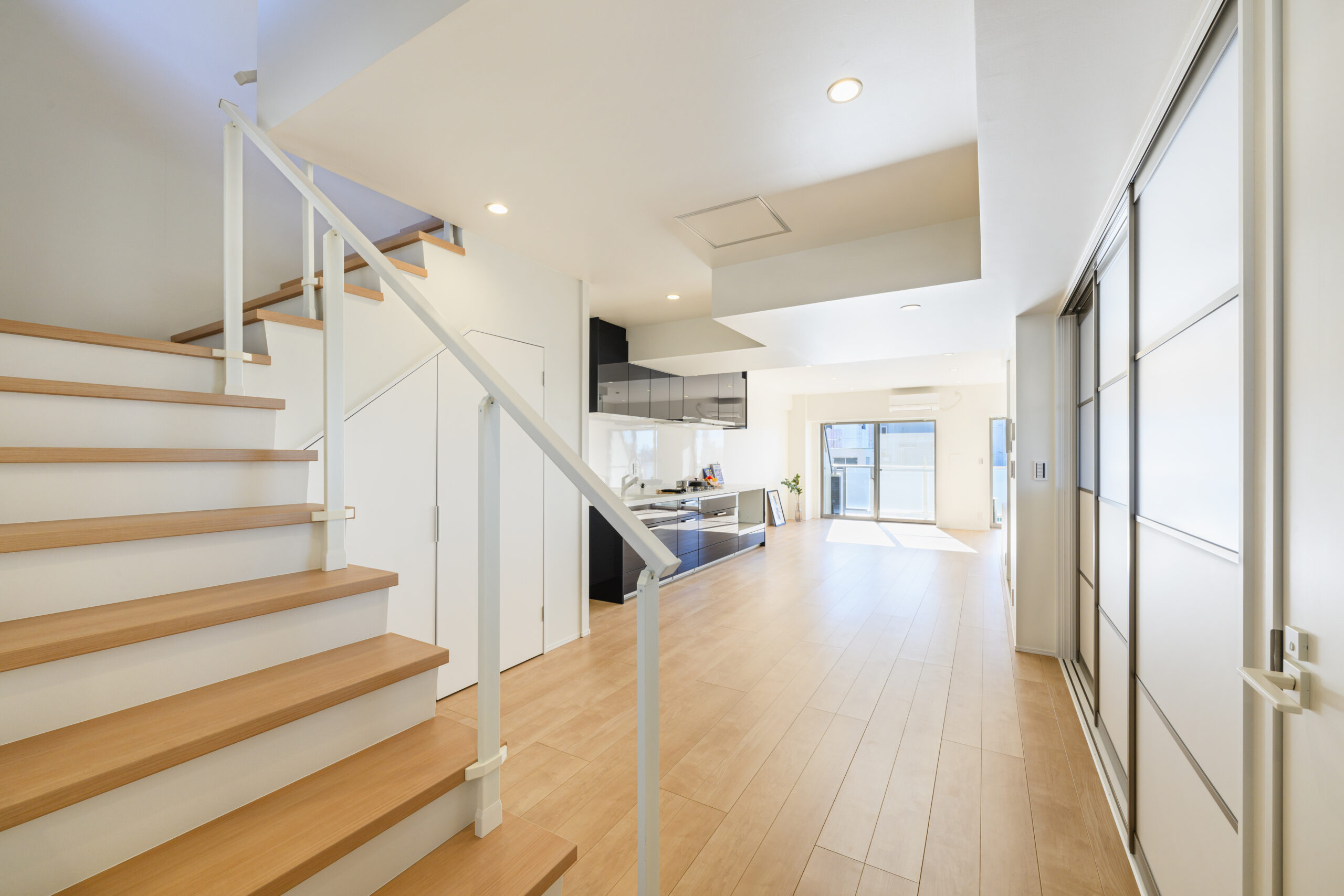
Effective marketing should reach the buyers most likely to value the property.
A Tokyo property may appeal to:
- Japanese owner-occupiers
- Foreign residents
- Overseas buyers
- Japanese investors
- International investors
- Corporate buyers
Japanese-Language Marketing
The majority of local property searches and communication between Japanese real estate companies take place in Japanese.
A selling strategy may therefore include:
- Japanese real estate information networks
- Major Japanese property portals
- Communication with other brokerage companies
- Existing buyer databases
- Local market networks
English-Language Marketing
English-language marketing may increase exposure to foreign residents and overseas buyers, particularly for properties in central Tokyo or areas popular with international clients.
This may include:
- An English property description
- English inquiry handling
- International property networks
- Virtual viewings
- English explanations of the building and transaction
English marketing should supplement the Japanese market rather than unnecessarily limiting the property to foreign buyers.
Avoid Property Information Being Restricted
Sellers should ask how quickly the property will be released to the market and whether other brokerage companies will be allowed to introduce buyers.
Restricting information can reduce competition and may conflict with the seller’s objective of reaching the widest appropriate market.
EM Labo states that it publishes property information through Japan’s real estate network and encourages other agencies to promote its listings rather than restricting access to the property.
How Should a Seller Evaluate an Offer?
The highest price is important, but it is not the only consideration.
An offer should also be evaluated based on:
- Whether the buyer requires a mortgage
- Whether preliminary financing has been completed
- The amount of the deposit
- The proposed contract date
- The proposed closing date
- Any requested repairs or conditions
- The likelihood that the transaction will be completed
Buyer Financing Matters
A buyer may offer the full asking price but still present a higher risk if financing is uncertain.
A lower offer from a well-prepared cash buyer or a buyer with preliminary loan approval may sometimes provide greater certainty.
Review the Financing Clause Carefully
If the contract permits the buyer to cancel when financing is not approved, the clause should clearly identify the relevant loan amount, application deadline, approval deadline, and cancellation procedure.
Your agent should help assess both the price and the strength of the buyer’s overall conditions.
Can You Sell Property in Japan with an Outstanding Mortgage?
Yes. Many properties are sold while a mortgage remains registered.
However, the mortgage normally needs to be repaid and the lender’s security interest removed when ownership is transferred to the buyer.
When the Sale Price Exceeds the Mortgage Balance
If the sale proceeds are sufficient, part of the buyer’s payment can generally be used to repay the remaining loan at closing.
The judicial scrivener then handles the mortgage cancellation and ownership transfer registrations.
When the Sale Price Is Lower Than the Mortgage Balance
If the expected sale proceeds will not cover the mortgage balance and selling expenses, the seller may need to provide additional funds.
The sale cannot normally proceed without arranging how the full loan will be repaid or obtaining the lender’s agreement to another solution.
Before listing the property, calculate:
- The expected selling price
- The current mortgage balance
- The early repayment cost, if applicable
- Brokerage fees
- Registration expenses
- Other selling costs
This allows you to estimate the amount you may actually receive after closing.
Can You Sell Japanese Property While Living Overseas?
It may be possible to sell property in Japan while living overseas.
Some stages can be handled through online meetings, international document delivery, virtual communication, and a Japan-based representative.
However, overseas sellers may need additional preparation.
Identity and Address Documents
A seller who no longer has a Japanese residence record or registered seal certificate may need alternative documents to prove identity, address, and signature.
Depending on the country and procedure, these may include:
- A valid passport
- Proof of overseas address
- A notarized affidavit
- A notarized signature certificate
- Consular documents
- Certified corporate documents for a company owner
The judicial scrivener handling the registration should confirm the required documents early in the process.
Power of Attorney
An overseas seller may appoint a representative to carry out certain procedures in Japan.
The permitted scope should be clearly stated in the power of attorney.
Some documents may need notarization or other authentication.
Remote Contract Procedures
Depending on the transaction and available systems, parts of the contract process may be completed remotely.
Your agent should explain:
- Whether an online explanation is available
- Which original documents must be sent
- Whether the seller must attend through video communication
- How identity verification will be completed
- Whether a representative will sign or act on the seller’s behalf
Receiving the Sale Proceeds
The method of payment should be confirmed before the contract is signed.
Issues may include:
- Whether the proceeds will first be paid to a Japanese account
- Whether an overseas transfer is required
- Bank documentation
- Transfer fees
- Foreign exchange rates
- Anti-money-laundering checks
- Evidence concerning the source of funds
A real estate agent can coordinate the transaction schedule, but banking and foreign exchange procedures are controlled by the relevant financial institutions.
Appointing a Japanese Tax Agent
If an overseas seller is required to complete Japanese tax procedures, the seller may need to appoint a tax agent who resides in Japan.
The tax agent may submit tax returns, receive correspondence, and handle payments on behalf of the non-resident taxpayer.
See the National Tax Agency’s information about appointing a tax agent.
Taxes When Foreigners Sell Property in Japan
The tax treatment of a property sale depends on the seller, property, holding period, purchase records, use of the property, and tax residency.
Foreign sellers should obtain individual advice from a qualified Japanese tax professional.
Capital Gain Is Not the Same as the Sale Price
Japanese tax is generally calculated based on the taxable gain rather than simply the gross sale price.
The general calculation considers:
- The sale proceeds
- The property’s acquisition cost
- Eligible acquisition expenses
- Eligible selling expenses
- Depreciation of the building where applicable
- Any available special deduction
Documentation of the original purchase is therefore important.
Useful records may include:
- The original sale and purchase agreement
- Brokerage fee receipts
- Registration-related receipts
- Construction and renovation invoices
- Documents concerning inherited acquisition costs
Long-Term and Short-Term Ownership
Japanese tax treatment distinguishes between long-term and short-term gains from land and buildings.
The classification is generally determined by whether the property has been owned for more than five years as of January 1 of the year in which it is sold.
A property held for five years or less as of that date is generally treated as a short-term holding.
The applicable tax rates and deductions should be confirmed for the year of sale.
Special Rules for a Former Home
Certain owner-occupied homes may qualify for special deductions or other relief when statutory conditions are satisfied.
Eligibility can depend on the property’s use, timing, relationship between the parties, and other requirements.
Do not assume that a deduction applies without having a tax professional review the individual transaction.
Tax in Your Country of Residence
An overseas seller may also have reporting obligations in the country where the seller lives.
A tax treaty or foreign tax credit may affect whether and how Japanese tax is recognized in the other country.
Japanese and overseas tax advice may both be required.
The 10.21% Withholding Rule for Non-Resident Sellers
When a person treated as a non-resident for Japanese tax purposes sells Japanese land or a building, the buyer is generally required to withhold 10.21% of the purchase consideration.
The withheld amount is paid to the Japanese tax authority rather than being paid to the seller at closing.
This can have a major effect on the seller’s closing proceeds and should be identified before the sale contract is finalized.
When Withholding May Not Be Required
An exception may apply when all of the following conditions are satisfied:
- The buyer is an individual
- The buyer acquires the property for the buyer’s own residence or a relative’s residence
- The total purchase consideration is JPY 100 million or less
If these conditions are not all satisfied, withholding may be required.
For example, withholding may generally remain relevant when:
- The buyer is a company
- The buyer purchases the property as an investment
- The purchase price exceeds JPY 100 million
Withholding Is Not Necessarily the Final Tax
The 10.21% amount is based on the gross consideration, not the final taxable gain.
It is therefore not necessarily equal to the seller’s final Japanese tax liability.
A tax return may be required to calculate the actual taxable gain and credit the amount already withheld. Depending on the result, the seller may need to pay additional tax or may be eligible for a refund.
Official information is available in the National Tax Agency’s guidance concerning the sale of Japanese real estate while working or living overseas.
Are you living overseas and considering selling a Tokyo property?
The withholding rule, required documents, mortgage repayment, registration, and payment arrangements should be reviewed before the property is placed on the market.
Costs of Selling Property in Japan
The amount you receive is the sale price minus the mortgage balance, taxes, and transaction expenses.
Possible costs include:
- Real estate brokerage fees
- Stamp duty on the sale agreement
- Judicial scrivener fees
- Mortgage cancellation registration expenses
- Survey or boundary confirmation costs
- Cleaning, repair, or disposal costs
- Moving expenses
- Early mortgage repayment fees
- Tax accountant fees
- Capital gains tax where applicable
- International bank transfer and foreign exchange costs
Real Estate Brokerage Fee
For many standard sale transactions above the relevant statutory threshold, the commonly used maximum brokerage-fee calculation is based on the sale price, a fixed amount, and consumption tax.
The actual fee and applicable calculation should be confirmed in the brokerage agreement.
EM Labo states that its sales brokerage fee is charged on a success basis after a completed handover.
Review EM Labo’s service fees before entering a brokerage agreement.
Estimate the Net Proceeds
Before deciding whether to sell, ask your agent to prepare an estimated settlement statement showing:
- Expected sale price
- Mortgage repayment
- Brokerage fee
- Registration expenses
- Other anticipated transaction costs
- Possible non-resident withholding
Taxes should be confirmed separately with a tax professional.
Documents Commonly Required to Sell Property in Japan
The exact documents depend on the property, seller, mortgage, and country of residence.
Common documents may include:
- Passport or other identification
- Residence card, where applicable
- Certificate of residence
- Registered seal certificate
- Title identification information or title certificate
- Original purchase agreement
- Property tax statements
- Condominium management documents
- Repair and renovation records
- Building plans and inspection documents
- Mortgage information
- Bank account information
- Proof of overseas address for an overseas owner
- Notarized signature or affidavit documents where required
Condominium Documents
For a condominium, the agent may need information concerning:
- Management fees
- Repair reserve contributions
- Management rules
- Major repair plans
- Owners’ association records
- Parking or storage rights
- Renovation and pet restrictions
Detached House and Land Documents
For a detached house or land sale, additional documents may concern:
- Land boundaries
- Survey records
- Road access
- Building permits
- Inspection certificates
- Past additions or alterations
- Retaining walls and utilities
Missing documents do not always make a sale impossible, but they may increase the investigation required.
Should You Sell or Rent Out the Property?
Foreign owners who are leaving Japan do not always need to sell immediately.
Depending on the property and personal circumstances, renting it out may be another option.
Possible Reasons to Sell
- You need the sale proceeds
- You do not want ongoing management responsibilities
- The property is no longer suitable for your plans
- You expect limited rental profitability
- You want to simplify your Japanese tax and administrative obligations
Possible Reasons to Retain and Rent
- You may return to Japan
- The property has stable rental demand
- You want to retain exposure to Tokyo real estate
- The current sale price does not meet your expectations
- You are prepared to appoint a property manager
Compare the Net Results
The decision should consider:
- Expected sale proceeds
- Expected rent
- Vacancy risk
- Management fees
- Repairs and future renovations
- Mortgage conditions
- Tax obligations
- Your long-term plans
A real estate agent can provide market information about the possible sale price and expected rent. Legal, financial, and tax decisions should be reviewed with the appropriate specialist.
Learn more about EM Labo’s property leasing support.
How to Choose an English-Speaking Selling Agent in Tokyo
The best agent is not necessarily the agent who presents the highest initial valuation.
Consider whether the agent can provide the following support.
Experience with Property Sales
Confirm that the company regularly represents sellers rather than focusing mainly on buyer or rental introductions.
Local Tokyo Market Knowledge
The agent should understand the property type, area, likely buyer, and relevant price range.
Japanese and English Marketing
A bilingual strategy can help the property reach both the domestic market and appropriate international buyers.
Clear Activity Reports
The seller should receive information about inquiries, viewings, buyer feedback, and marketing activity.
Transparent Property Distribution
Ask whether the property will be promptly shared through the relevant Japanese real estate networks and made available to other buyer-side agents.
Experience with Overseas Sellers
The agent should understand remote communication, alternative identity documents, powers of attorney, tax-agent coordination, and overseas payment concerns.
Access to English-Speaking Specialists
A foreign seller may need support from:
- A judicial scrivener
- A tax accountant
- A lawyer
- A surveyor
- A renovation or repair company
The real estate agent should recognize when specialist advice is needed.
How EM Labo Supports Foreign Property Sellers
EM Labo is a Tokyo-based licensed real estate brokerage providing English-language support to international property owners.
Our sales support may include:
- An initial consultation in English
- Property investigation
- Market analysis and valuation
- A recommended pricing strategy
- Japanese and English marketing
- Coordination with other brokerage companies
- Viewing arrangements
- Buyer and offer analysis
- Price and contract negotiations
- Document explanations in English
- Mortgage repayment coordination
- Closing and handover support
- Support for sellers living overseas
- Introductions to English-speaking specialists
What EM Labo Does Not Do
EM Labo does not provide individualized legal, tax, or regulated financial advice outside the scope of real estate brokerage.
We cannot determine:
- Your final Japanese tax liability
- Your tax obligations in another country
- Whether a particular tax deduction applies
- The legal effect of overseas documents without specialist review
- Whether a bank will approve an exceptional mortgage arrangement
When necessary, we coordinate with appropriate professionals while managing the property transaction.
Learn more about:
Frequently Asked Questions
Below are common questions about selling Japanese property as a foreign owner.
Can a foreigner sell property in Japan?
Yes. Foreign nationals can generally sell Japanese property they legally own. The procedures may differ depending on the seller’s residence, tax status, documents, mortgage, and ability to attend closing.
Do I need permanent residency to sell property?
No. Permanent residency is not generally required to sell a property you own.
Can I sell my Japanese property after leaving Japan?
Yes, it may be possible. You may need alternative identity and address documents, a power of attorney, a Japanese tax agent, and coordination with a judicial scrivener.
Do I need to travel to Japan for the sale?
Not always. Some transactions can be handled largely from overseas. Whether physical attendance is required depends on the documents, registration procedures, buyer, contract process, and professionals involved.
Can I sell a property with a mortgage?
Yes. The remaining loan generally must be repaid and the mortgage registration removed by the time ownership is transferred.
What happens if the mortgage balance exceeds the sale price?
The seller may need to pay the shortfall from other funds or obtain the lender’s agreement to an alternative arrangement. The mortgage cannot normally be removed without resolving the outstanding debt.
Will 10.21% always be withheld from a foreign seller?
No. The rule generally concerns sellers treated as non-residents for Japanese tax purposes, not every person with foreign nationality.
An exception may apply when an individual buyer purchases a property for personal or family residential use and the consideration is JPY 100 million or less.
Is the 10.21% withholding the final tax?
Not necessarily. It is withholding based on the gross consideration. A Japanese tax return may be used to calculate the actual gain and credit the amount withheld.
How long does it take to sell property in Tokyo?
The period depends on the price, location, condition, buyer demand, marketing strategy, and contract schedule.
A realistically priced property may receive an offer relatively quickly, but the complete process also includes investigation, contract preparation, buyer financing, mortgage repayment, and closing.
Should I select the agent offering the highest appraisal?
Not automatically. Ask for supporting transaction data, the expected buyer, marketing plan, likely selling period, and strategy if inquiries are limited.
Can EM Labo provide an English valuation?
EM Labo provides English-language consultations and explanations concerning its property valuation and proposed selling strategy.
Can EM Labo file my tax return?
EM Labo is not a tax accounting firm. When tax assistance is required, we can coordinate with an appropriate English-speaking professional.
Request a Property Valuation in English
Selling property in Japan as a foreigner is possible whether you currently live in Japan or overseas.
The transaction should nevertheless be planned carefully.
Before placing the property on the market, you should understand:
- The property’s realistic market value
- The expected selling period
- The remaining mortgage balance
- The documents needed for ownership transfer
- The estimated selling costs
- Whether non-resident withholding may apply
- How you will receive the sale proceeds
- Which tax and registration specialists may be required
EM Labo supports foreign property owners selling homes and investment properties in Tokyo and the wider Kanto area.
Tell us about the property, ownership, current occupancy, mortgage, desired schedule, and your country of residence. Our English-speaking team will help you identify the practical next steps.
Considering Selling Property in Tokyo?
Speak with EM Labo’s English-speaking team about valuation, marketing, overseas procedures, mortgage repayment, and the selling schedule.
Request a Property Consultation
Learn more about our property sales support and service fees.
The information in this article is provided for general informational purposes and does not constitute legal, tax, accounting, investment, or financial advice. Tax residency, withholding, filing requirements, deductions, required documents, and transaction procedures depend on the individual seller and property. EM Labo is a real estate brokerage and is not a law firm or tax accounting firm. Please consult an appropriate qualified professional regarding your individual circumstances.
- Japan Mortgage for Foreigners: Can You Get a Home Loan Without PR?
- Buying Property in Japan as a Foreigner: A Practical Guide for Tokyo Buyers
About the author

Related Posts
-
 Non-Resident Selling Property in Tokyo: A Guide for Overseas Owners
-
Capital Gains Tax on a Japan Property Sale: A Guide for Foreign Owners
-
Buying Property in Japan as a Foreigner: A Practical Guide for Tokyo Buyers
-
Japan Mortgage for Foreigners: Can You Get a Home Loan Without PR?
-
Real Estate Agent for Foreigners in Japan: Complete Tokyo Property Support
-
Can Foreigners Buy Property in Japan? Rules and Requirements
-
Property Management for Foreigners in Japan: A Guide for Overseas Owners
-
Can I Buy a House in Japan on a Work Visa? A Complete Guide